

Modernizing high-risk systems in the age of AI.
The Price of Agency
What connects these debates isn't the tools themselves—it's the kind of agency they grant and what that agency costs us

Founder, Def Method
My two favorite topics lately have been the explosion in popularity for OpenClaw and the reactions to Gas Town. Both products hit on something related, which may explain why they've both sparked such fierce debate.
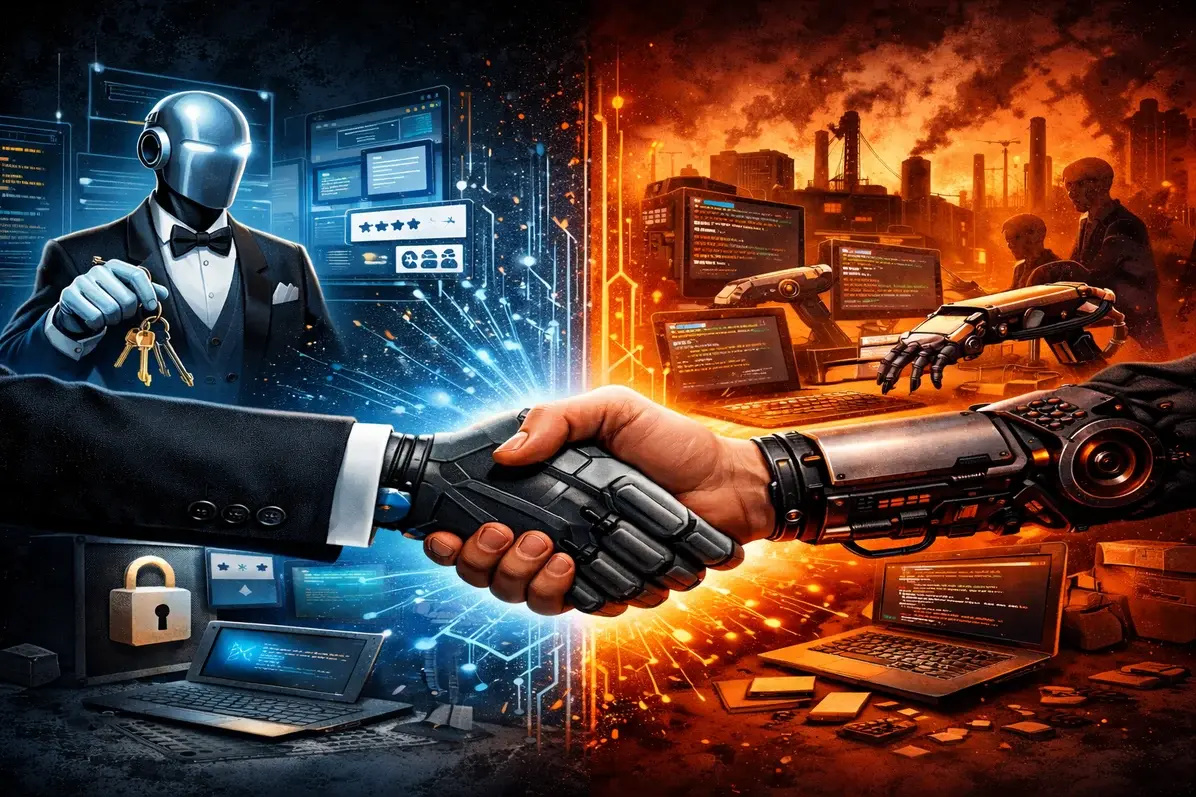
What connects these debates isn't the tools themselves, but the kind of agency they grant and what that agency costs us.
OpenClaw: The AI Butler
OpenClaw (formerly Moltbot; formerly ClawdBot) is an exciting, cutting edge use case for LLMs in the personal assistant space. You fire one up, give it instructions, and it cuts across systems, tools, and communication platforms to do your bidding. It's also an open source platform, which means you only pay LLM fees to use it.
As Jamieson O'Reilly put it, you treat OpenClaw like your AI butler. And like any butler, you hand it the keys. Usernames and passwords, credentials, SSH keys, full access to your systems and, of course, your entire chat history. You host it yourself, configure it yourself, and decide how it's secured.
If that makes you uncomfortable, it should. As a baseline reality, far more people can follow a tutorial and set up a server than can competently secure one. That doesn't mean you can't or shouldn't use OpenClaw, but it does mean you're playing with fire unless you really know what you're doing.
O'Reilly is clear-eyed about this tradeoff: technology this valuable isn't going to be stopped. OpenClaw may not be the future, but it's clearly a preview of it. It's AI agents acting on our behalf, and the entirely new risk profiles that come with that power.
Gas Town: The Coding Swarm
Gas Town sits on the other side of the same coin. Polarizing engineer Steve Yegge's multi-agent coding orchestrator is explicitly designed for engineers who are running so many agents concurrently that human coordination breaks down.
Slightly more implicitly, it's also designed for engineers who are content to no longer even view the code their agents generate. Though he is its sole creator, Yegge states plainly that he's never once looked at the code that powers Gas Town.
Yegge says that Gas Town is not for everyone and in the same breath claims it will be for everyone, eventually. Gas Town builds for a future where agents are always running, always coding, and where throughput exceeds even bullish expectations of a couple of years ago.
The Deeper Question
Both OpenClaw and Gas Town imbue LLMs with an agency that stirs strong emotions in us humans. One side expresses wonder at what's now possible and enthusiasm for the future. The other expresses fear at potential downsides, anxiety about obsolescence, and concern over a loss of control.
I believe that a technological shift this large demands an equally serious response from the software engineering community that helped create it.
As I wrote last time, new uses are emerging and, importantly, they're not all coming from the obvious players. OpenClaw and Gas Town are two such examples. As acts of creativity alone, they're worth paying attention to.
Use them or don't. Argue for them or against them. But don't sleepwalk past this moment.
Our work is here in the ambiguous, uncomfortable, uncertain present. The future isn't settled. It's being negotiated in real time.
Ready to modernize your Rails system?
We help teams modernize high-stakes Rails applications without disrupting their business.
If this was useful, you might enjoy Essential Complexity — a bi-weekly letter on modernizing high-risk systems in the age of AI.